
About Aid-One
A hands-on clinical instrument designed to support treatment of stress, trauma, and PTSD - enabling more structured and consistent care.
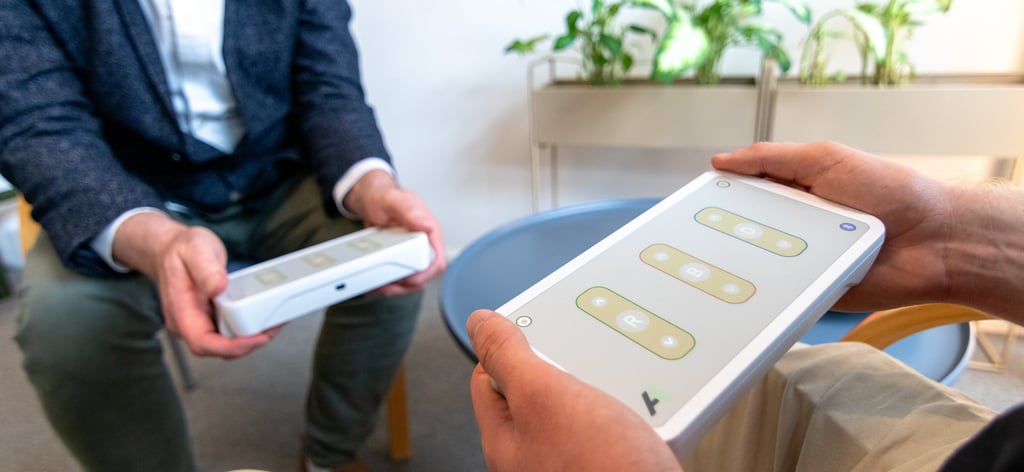
Introducing Aid-One

Aid-One features
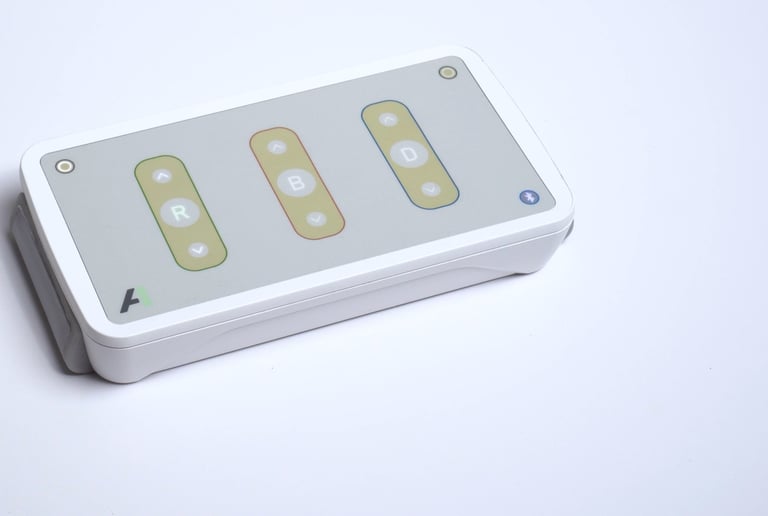
Guided Breathing Support
Helps clients prolong exhalation and reduce physiological stress responses during sessions.
Built for Clinical Practice
Easy to integrate into existing therapeutic methods before, during or after activation.
Bilateral Stimulation
Structured tactile input supporting emotional processing and cue exposure work.
Bottom-Up Regulation
Haptic rhythms designed to help scale down autonomic activation in real time.
Learn more about Aid-One
Watch our demonstration and explanation videos below


Built with care and responsibility
Transparency
Clear communication about how solutions work and how they are used.
Respect and privacy
Mental healthcare requires trust. We prioritize responsible use and respect for individuals.
Responsible development
Designed with attention to safety, usability, and long-term impact.
Clinical grounding
We develop our approach with a strong understanding of real-world mental healthcare practices.


Frequently asked questions
What is Aid-One and how does it work?
Aid-One is a tactile device that delivers rhythmic bilateral pulses to the palms, designed to calm the nervous system and foster emotional clarity. It integrates the structure of evidence-based trauma work into a handheld form — so the body can exhale while the mind begins to reset.
Who can benefit from using Aid-One?
Anyone carrying invisible weight — crisis workers, overstimulated parents, overwhelmed youth, or those frozen by trauma — can benefit. It offers regulation before words, grounding before strategy.
Is Aid-One scientifically backed?
Yes. Aid-One unites two clinically validated approaches: EMDR's bilateral stimulation and the therapeutic power of prolonged exhalation. Together, they form a haptic choreography proven to down-regulate stress and build resilience.
Can Aid-One be used alongside other therapies?
Effortlessly. It supports EMDR, talk therapy, somatic work, and mindfulness practices. Therapists describe it as "the extension of the session" — a bridge between appointments, a steady rhythm in uncertain terrain.
Our office


Understanding Aid-One on a deeper level
Find more information about our mission and how we support the mental healthcare industry
on our company page.
Get in touch
Do you have a question regarding our solution or mental healthcare? Reach out to us using the contact form or our details below:
Phone
+45 20 88 18 40
office@1aider.com
Supporting mental health, in practice
Contact
Newsletter
office@1aider.com
+45 20 88 18 40
© 2026. All rights reserved.
CVR: DK44613107